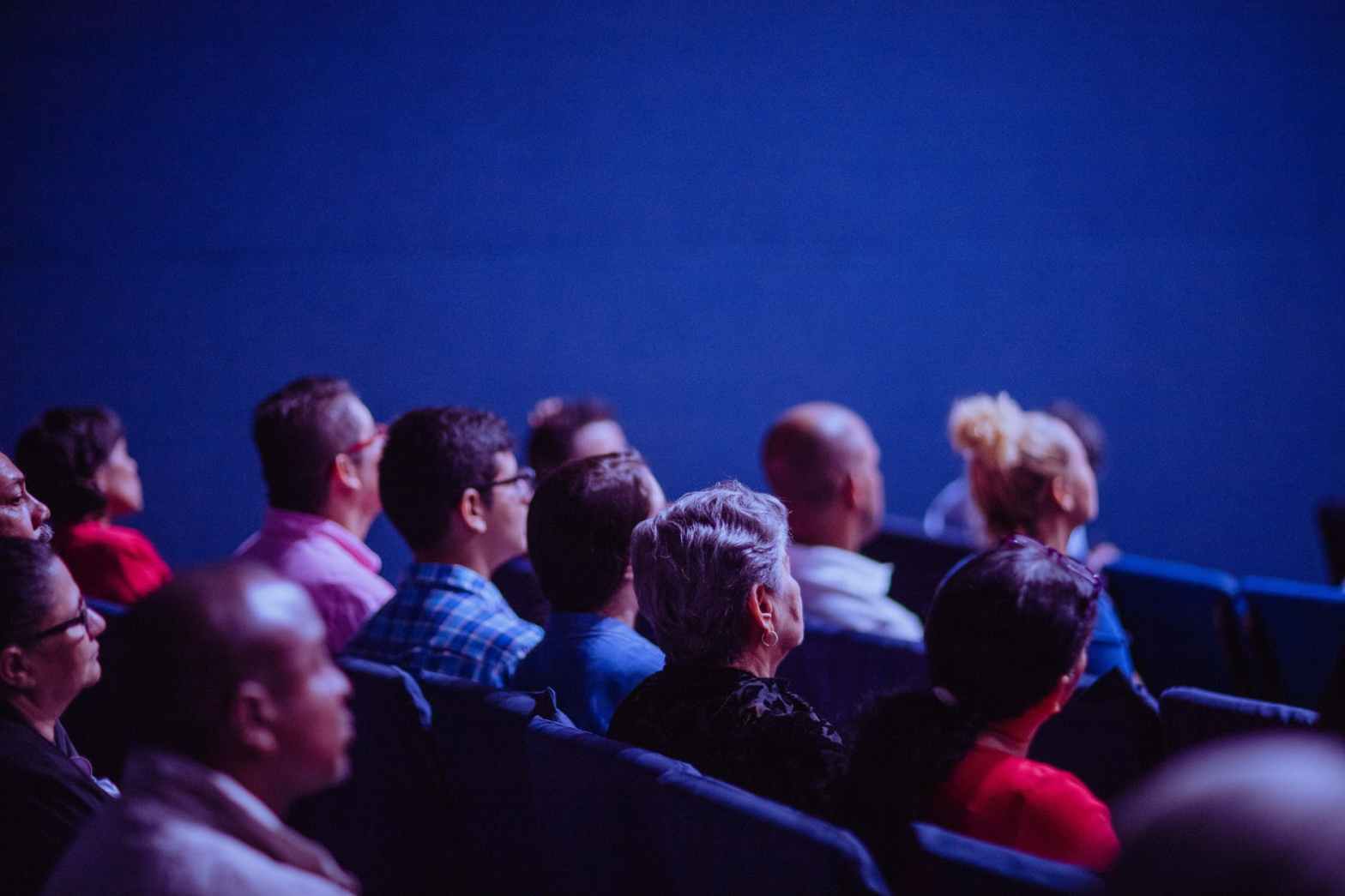
(A short story)
First published by Infinity Wanderers Magazine (Issue 1)
***
Even when I look away, I can still see her in my mind. Winnifred. Back arched against the doorframe, watching as I write up my notes. A fond smile now twisting her red lips. I glance up. The smile disappears. She casts her eyes nonchalantly away to the tiny porthole window, the black night outside, no stars. Taps the wristwatch I gave her, three purposeful strikes, long fingers, elegant black nail varnish.
“For God’s sake, I’m almost done!” I regret my tone as soon as I’ve said it. Winnifred turns from the porthole, purses her lips at me. “Look, just two more to write up,” I continue – more amicably, I hope. “Nine-to-five patients today, sweetheart. One an hour, each with their own neuroses. That’s an awful lot of paperwork to deal with at the end of the day.” And my mind murmurs, It’s alright for you, love, not having to work a day in your life. And then quickly retracts: Not that you could, even if you wanted to. Perhaps you do want to…
“You said you’d be finished at seven.”
“What time is it now?”
“Half eight.”
“We’ll make the nine-o-clock showing. Promise.” How many promises have I broken, I wonder, as I close the file and place it in the outbox tray? I hate how the lie trips off my tongue. Too many times. Any normal situation, she’d have left me long ago. My eyes twitch towards that tiny porthole into the abyss. The endless night. No stars. No escape.
“Are these the last ones?” Suddenly she’s at the desk, a hand on the ‘inbox’ tray. I brush her away, a gentle gesture. She shifts. Only one file left in the box: I’m on track for keeping my promise this time. “Sheesh, you had a lot of crazies today!”
“More and more every day, now the first-borns are old enough to start questioning things.” I flip the cover of the next file. Gordon, Thomas. I remember this one, because he was my four-o-clock; my mind has yet to erase him ready for the next onslaught. “You can sit on the couch, if you’d like.”
I see her, from the corner of my eye, crossing the room. She matches the décor: sophisticated retro-forties chic, a sleek, glossy version of home I never got to experience. I have excellent taste. She moves to the black faux-leather couch and lies there, spreading out and back like a gothic Marilyn Monroe. She nods at the file in my hands. “Read to me.”
“You’re a devil.” I remove my headset, check for noise. Of course, half past eight on a Friday night, the East Wing is silent as a morgue. So I scan down the first page. “Thomas Gordon. Age, eighteen. Birthplace, non-terrestrial-”
“Boring. Come on, Rosalind. I want the gossip!”
“In what sense?” I take a closer look. “Uh – wants to be a poet, of all things. Isolates himself from his peers. Never misses the Friday Night Film-” I catch myself too late. Winnifred rolls her eyes. “Let’s see. Unconventional clothing choices. Oh, he rolls up pieces of paper, pretends to smoke them like cigarettes, like in the old movies? Gets bullied for that, but does it anyway. Likes to think of himself as brooding for the Earth, even though he’s never been there. But a lot of kids do that.”
“Seriously? I’m talking weird dreams, repressed sexuality, all that jazz!”
“Shrinks don’t do that anymore, Winnifred.”
“What, nothing? Is this freaky kid seriously gonna make me miss the start of Gone with the Wind?”
I still don’t know why they chose that film. Perhaps they’ve finally exhausted the supply of romantic comedies and stylish dramas. Perhaps the assortment of white-haired doctors and scientists down in the film lab knew the name and the ‘tomorrow is another day’ line with the sunset, and assumed it was another happy romance flick along the lines of Gentlemen Prefer Blondes. I remember the backlash. The uncomfortable depictions of slavery. I took Twentieth Century Film in college.
“Suck it up, move on. That’s what I’d tell him, Ros. Quit living in the past!”
Thomas Gordon smiles uncertainly at me from the top-right-hand corner of his file. A freckled face peeking out from beneath a fedora, a high-collared shirt buttoned up to his neck. I run a finger over the photo. Try to imagine him sitting in a loft apartment in some picturesque college town, writing in a ledger with a fountain pen. Sun shining through the window, a peaceful smile on his face, maybe a lover of whichever gender he prefers lounging on his bed…
“It’s almost eight forty-five, Rosalind!”
Now rising, going to the window, lighting up a real cigarette without knowledge of, or care for, the consequences. Exhaling smoke into the breeze, watching the wisps drift out over a redbrick cityscape, far away, into a clear blue sky-
“Are you listening to me?”
“What? Time, I know.”
“No, not that,” says Winnifred. “I changed the subject. Gotta listen. I said, do you know who performed at the premier of Gone with the Wind?”
“What- Who?”
“Martin Luther King. I know, right? Back when he was a kid. They had a bunch of no-names acting at the premiers to get the audience excited, right, and he was one of them. He played a slave boy.”
“I don’t know what to do with the irony of that,” I say. Then it strikes me. “Winnifred – how did you know that?”
“Because you know it. Duh.”
I must do. Somewhere, in the back of my mind. Because Winnifred cannot know something that I don’t.
“Eight-forty-eight, Rosalind. You promised!”
“Why do you want to see Gone with the Wind so much?” I turn my shrink-stare on Winnifred and bask in the blushing response I receive.
Winnifred looks at the ceiling. “Well… I dunno. It’s a stupid movie.”
“But?”
She lies back on the couch. I know what her answer is going to be before she says it. It’s the answer I want her to give. “But I wanna spend time with you, honey! I love you.”
Nobody belongs to anyone. Everyone is free.
That mantra was supposed to come as a welcome relief to modern humanity, women in particular. Never convinced me, though. I would lie awake some nights in my loft apartment back in DC, heart racing, blood electric from the things I’d heard at the Institute that day, and imagine the dark cluster of pillows beside me into a spouse: someone I knew would be a permanent fixture beside me, no matter how much of a middle-aged stiff I became. No chance of the real thing. By the time I left Earth, divorce had become so frequent, the paperwork was dropped and all one had to do was request a ‘null and void’ stamp on one’s marriage certificate. Thirty minutes to process. Your average American went through four to six marriages in a lifetime. Who cared about longevity when the planet itself was dying?
“You wanna spend time with me too, right?”
I remember when I first saw her. Sweat-drenched, my mind turning somersaults, I had dragged myself down the baking streets from the Institute one night and slipped into the air-conditioned lobby of the E Street Cinema. The tiny screening room was packed. People trying to escape the outside. Fans wheezing from the ceiling, so loud they had to put subtitles on the English-language film. The lights came down, and there she was. For two dreamlike hours, she laughed and smiled and flirted with the camera, more alive in black-and-white than I felt in burning orange Technicolor. I knew then, I had to make her mine. I needed her.
I need her even more now. Not because she reminds me of home, but because she is everything I need home to have been.
“Rosalind!”
“Oh, be quiet,” I say. And I smile. I’m starting to enjoy the argument, because I know there’s nothing she can do about it. She is imprisoned in my fantasy.
“Jesus, Rosalind! I’m allowed a little escapism!”
She hits the little porthole window. Again. Again. The blackness outside. No stars. I know she can’t do any damage. Still-
“For God’s sake, you’re not the only one struggling with this ridiculous situation, Winnifred!”
“Who are you talking to, Doctor?”
Thomas Gordon. Budding poet, clinical neurotic, my four o’ clock. Standing in the doorway – for how long?
I wrestle off the headset – pull off the goggles, remove my headphones, thinking, sorry, sorry, sorry, as I hear her voice – “Rosalind, you promised…” – become quieter, fainter, then dead. The sounds of reality return.
“Sorry,” says Thomas Gordon. He fiddles with the tip of his fedora, his shirt cuffs. “If this is a bad time…”
“No. Come, sit down.” My eyes flit to the couch where Winnifred was lying. Thomas goes, sits there. It makes me wince, and the wince makes me smile to myself. If I put the headset back on, she’d probably be bristling by the couch, fiercely rebuking him for taking her seat. “What’s on your mind?”
Thomas stretches out on the couch. He stares up at the ceiling. “You know they’re showing that film down in the screening room?”
“Gone with the Wind?”
“Sure.” He falls silent.
“You’re not watching it tonight, Thomas?” I prompt. “I thought you enjoyed those films.”
“I do… Did.” A small frown creases Thomas’s pale forehead. “I mean… do you think it’s healthy, watching those films every week?”
“Watching films can be healthy, Thomas, as long as you balance it with a healthy diet, meaningful work and exercise.” I sound a little like Hannibal Lecter when I go into shrink-mode. Dead-pan, eerily gentle. It pleases me to know that people like Thomas will never have access to those sorts of films, the less-than-sparkling reproductions of Earth which live upstairs in my private collection for those drunken, masochistic evenings when I want a nice dark dose of True Human Nature. It will remain my own private in-joke.
“Not physically unhealthy.” Now Thomas sits up again. He’s staring at me, pain in his eyes. “Like… mentally unhealthy.”
I’m not sure I like being stared at by Thomas. His bottomless brown eyes seem to understand more than should be possible. But I can’t put my headset on now. “Explain.”
Thomas gets up and starts pacing the room. “So after our session, I went down to the screening room, right? Like I always do. They have that big clock on the screen, you know, counting down the minutes to the next showing? Well, as it got closer and closer to nine, I started to feel sick, like. Panicky. It got to eight forty-five, and the lights started to come down for the cartoon reel – and I took off. I just couldn’t… Not one of those films, not again!”
“Why?” I prod. “What do you see in those films, Thomas?”
“Propaganda.”
“Propaganda?”
“Yeah. I mean, every Friday, we’re shown the same recycled crap. Idiots overcoming adversity. Pretty landscapes. Boy gets girl. And they say it’s comforting for us, it’s educating us about our past. But you know what I think?”
“What’s that, Thomas?”
“I think it’s a lie!” He must have picked up on some subtle change in my expression, because the eagerness in his body is evident, a cat ready to pounce. “Planet Earth wasn’t like that. I’m right, aren’t I?”
Lying on the mattress in my loft apartment. No money for anything bigger; no space in a city choked with humanity. The sun growing brighter, hotter, redder through the skylight. Frying in my own skin. There was no Gone with the Wind on our televisions, you lucky little brat: we had rolling news, starving children; cities, countries underwater; and I would lie hugging my cushion-spouse, whispering to it, We’re getting out, the world doesn’t know but I do, I’ve got connections, medical and tech skills, the right job with the Institute; we’re the lucky few that are going to be saved…
I shake it off. I smile. “Then why do you think they’re showing you those films, Thomas?”
“Well.” Thomas toys with a book in my bookcase. He notices me frowning; sheepishly pushes it back. “I guess it’s not their fault. They think if we have a happy idea of what our home is, we’ll be happy people.”
“And are you happy, Thomas?”
“No!” He says it so forcefully, I almost recoil. “I mean, how can you be happy when your home is a lie?” He looks determinedly at me. “I’m eighteen, Doctor. Eighteen years, I’ve been told this pretty little place called Planet Earth is my home, but – but it’s just not, is it? It’s a fantasy!”
A group of us around a conference table, delirious with panic and air-conditioning headaches – hadn’t we agreed to discourage this kind of thinking? That we would imbue the future generations with our ‘fond memories’? Our comforting, sick delusions…
“And what does that tell you, Thomas?” I can’t help but ask.
“That… that this is my home.” He smiles. “This ship – this is my home. And I’ve got to accept it and find some meaning here, right?”
Clever boy. The constant films, drip-fed nostalgia, fake film-reel memories; it never was for them, was it? More of a ‘misery loves company’ thing. I give him my best cryptic grin. “Is that everything, Thomas?”
“Yeah. Yeah, that’s all I needed to know.” Thomas nods eagerly. “Thanks, Doctor. Thank you so much.”
“Any time.”
Thomas leaves, stepping buoyantly out the door. I count to thirty. Then I take my headset over to the couch. I lie down, and I put on my goggles, my headphones. I close my eyes and listen.
“You weren’t supposed to do that, Rosalind.”
I picture Thomas, walking freely down the corridor. I picture him slipping into the screening room, glancing over the rows of young faces, tender minds ready to be warped by the nostalgia machine; leaning over a chair, whispering in an ear…
“You weren’t supposed to tell him it’s all baloney! They could take me away from you. They said they would, didn’t they, if you go against the rules?”
“They won’t do that, Winnifred.”
Even if they take away the headphones, the goggles, they can’t. You’re part of me, Winnifred: locked in my mind, more real than the actress vamping on the screen of the E Street Cinema, more real than the wilting cities and the blood-red skies and a million other things I have already blocked from my mind. And with any luck, like the lingering ghost of the Earth, you’ll sink into the ether when I do. An irrelevant historical blip in the eyes of a shiny new generation.
“And now it’s nine! Come on, Ros! Don’t you want to see Gone with the Wind?”
“It won’t be as good as we remember it,” I say. “Nothing ever is.”
 Hannah Hoare