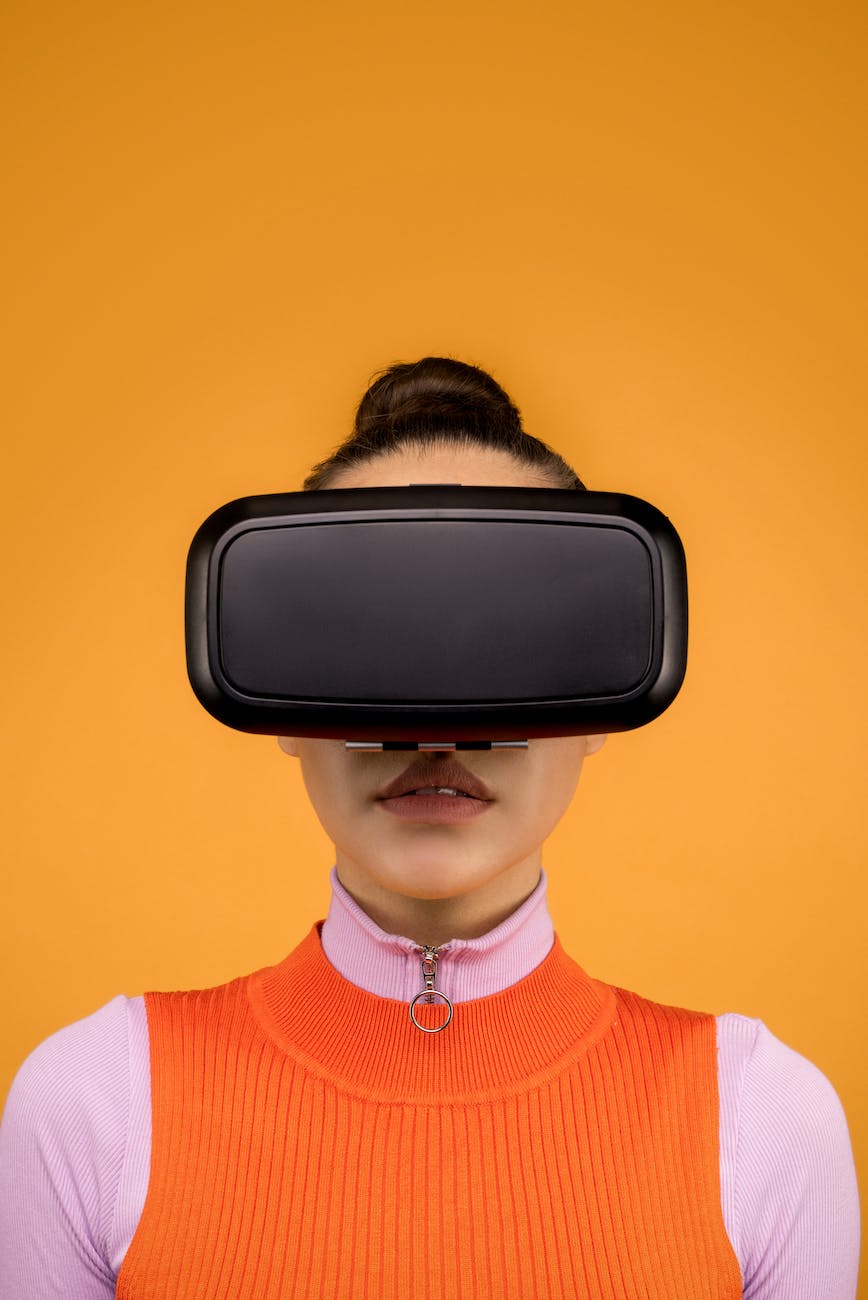
(A short story)
***
First published in Bacopa Literary Review 2023
My occupational therapist said I’d do better with a paper calendar. They’re almost all out-of-print now: the special one they ordered for me has kittens on it. To hang the thing I forced a big rusty nail into the wall of my council flat, because fuck it; and I won’t deny I enjoyed hammering so hard it left a lightning-bolt crack through the panel where my Liminal Space goggles would have hung.
Here is today, circled in red. Third Thursdays are for accessibility needs, so that’s when I go to the job centre.
A pair of joggers. A t-shirt. A script already forming in my head.
For a moment, I consider dusting off one of my old suits, just for fun. Maybe the brown one, with the leather patches on the elbows? But – hell. The scooter-bots won’t stop to swoon at my attire. Nor will Cathy at the job centre, who is just another kind of robot. I am meeting Billy later – but who the hell dresses up to loiter in the park and hurl pebbles at the swans?
Besides, it looks like another hot one today. I would have been able to check, once upon a time. An era of TV screens and thermostats and other visuals which exist no longer, now they have blessed us with the Liminal Space.
Billy has left another note on my doormat. Must have slipped it through en route to his appointment. Scrawled on the back of one of the ancient take-away menus he hoards: ‘LIMINAL SPACE, NOUN: A THRESHOLD BETWEEN REALITIES. ONLY AN INSANE MIND CAN ENJOY THE LIMINAL SPACE. WE CHOSE REALITY. WE ARE THE SANE.’ Billy likes to educate. Facts and definitions are like rocks he can cling to as society’s rules bend and flow. He was struggling to get his footing on the social ladder long before the Liminal Space was forged.
The yellow-white, empty corridor outside my studio has no windows. Only jittery, motion-detecting ceiling lights which flick on-off-on as I pass door after locked door. Beyond each door will be a body slumped in a chair, blinkered by Liminal Space goggles.
A door creaks open behind me. Even before I turn, I know it won’t be a real person.
It’s not a scooter-bot. I was correct, though: this grey-haired woman, though human in form, wears the sharp white overalls of the condemned. She hefts a bulging bin liner. She glares venomously at my joggers and t-shirt.
I wave.
She spits. Then she turns and heaves her heavy black sack down the corridor, towards the stairs. A foul stench follows her.
*
No passengers stand on Platform One.
A knee-high scooter-bot is on patrol, though; its all-seeing eye scanning for trouble. I step forward. It hurtles at me. I stand my ground, staring dead into its black camera-eye, and only when the thing is almost on me do I step aside. It reaches the end of the platform, where it halts, spins to face me. It beeps. I glare.
Billy once said: “We’ve created a world for machines. Humanity is no longer our birthright. A human being must prove he’s machine enough to assimilate, or he becomes an animal.”
We are animals, Billy and I.
The scooter-bot beeps again, then trembles. It is beaming its footage, footage of me, back into the Liminal Space; where someone reclining in goggles and loose pants can ignore it, or authorise the robot to clean, capture, or destroy.
Scooter-bots learn to detect abnormality by memorising their typical surroundings. I wonder when this one last saw a human being.
*
The 11:05 is empty, as usual. I have the carriage to myself.
There’s an old, faded advert on the wall before me. Domestic violence helpline. A woman stares out, haunted, and the text beneath reads: ‘Need to escape, but don’t know how?’
I look right, left. I see no knee-high white robot floating down the aisle, but there are probably a few security cameras hidden somewhere. Good.
I fish a marker out of my pocket, and across the now-obsolete phone number at the bottom of the poster I write: ‘YES. PLEASE HELP!’
I have defiled something. For a moment, I feel satisfied.
Then I realise that nobody will ever read what I have written.
That’s when I start to cry a little bit.
*
I used to be a doctor.
I’m supposed to qualify that with, ‘Not a real doctor’. But I was a real doctor. I am a real doctor. I passed exams. Had work published. Led seminars, and spoke at conferences. I’m just not the sort of doctor you want careening through the crowds when you’re having a heart-attack, forcing people aside and yelling, “Step back, I’m a doctor of English literature! Give this man a shot of Shakespeare!”
And not, I suppose, the sort of doctor you’d want teaching a literature class anymore.
They say that classes in the Liminal Space have a ninety-eight percent attendance rate and a ninety-seven percent pass rate. A student can pre-programme their lecture to flash before their eyes and to play on a loop until their brain has processed the information. Does AI teach human words better than a human teacher? Can it create more beauty than a human mind?
I don’t want to know the answer to that.
It wasn’t like I chose to reject the Liminal Space. When they fitted those goggles on my face, I didn’t force my vision to go blurry. I didn’t purposefully strain the vomit up through my gullet and out over my desk. I didn’t lie in that hospital bed choking on grapes for three frantic days for the sheer hedonistic delight of it.
And I tried again. Twice, under medical supervision. There were still flesh-and-blood doctors out in the world back then; you didn’t have to beg them out of the Liminal Space or throw yourself at the mercy of a machine. The medics agreed there was a problem. Something about my brain, the way it worked, which made me incompatible with the new way of being.
But it’s not like I want a cure, either. As Billy likes to say, “They disabled us by changing the rules.”
They’re calling us ‘Subliminals’.
I quite like that, but it’s a word we’re not supposed to use anymore. Apparently it’s been tossed around the Liminal Space with so much hatred – “greedy Subbies leaching off the welfare state”, “stupid subbies doing nothing for society” – that most liberal-minded normies now cringe to hear it.
They’re working on a new name. Something with ‘Disorder’ or ‘Syndrome’ at the end. Something that can be abbreviated to two or three easy-to-say initials, so we can all leave the word ‘syndrome’ out of it and pretend we’re not being pathologized.
*
Most of the lights in the job centre have been turned off. We are spot-lit, Cathy and me, across a solitary table in a vast, crumbling room. Cathy looks bored. Dozy blue eyes peer over puffed, pale cheeks.
“Careers,” says Cathy. She frowns. “Have you given any more thought to domestic work? Hygiene? Waste disposal? Household upkeep?”
It’s the same old script, and so I give the same old answer: “A scooter-bot could do those jobs. Probably much better than me.”
“Probably.”
“So why force me into one of their jobs?”
“Because you are capable. And you need to contribute to society somehow.”
“Why contribute to society, when I’ve been excluded from it?”
Cathy looks away. She wants to get back to the Liminal Space, I can tell. Her gaze is distant, wistful, as if she is thinking of a lover or a drug. She sighs like a deflating balloon. “You’ll have to pick sometime.” She’s already packing up her bag. “Same time next month. Are you meeting Billy this afternoon?”
“That’s the plan.”
Cathy gives a sad little smile. “Poor old Billy. Give him my best, okay?”
*
I first met Billy at the job centre.
He was leaving; I was entering. Too old to have been one of my students, too shabby for a companion, and twitchy, and strange. He’s not the sort of person I would have given a second glance in my previous life. Nor in this one, probably, if Cathy hadn’t pounced. Wouldn’t it be adorable if we became friends, because Billy suffers from the same condition I do, because he also suffers from a host of other multiple-initials…
It was the one piece of good advice Cathy has ever given me. Billy taught me how we could enjoy our ‘suffering’ together.
I stretch back against the park bench, watching ducks roam the silent pond. The sun is high and warm. The grass is wild, romantically unkept. A scooter-bot trundles up and down the pathway, but far enough away that I can ignore it.
And – look! Here comes Billy.
His hair is a grey-blond catastrophe tied back in a bandana. He spots me, and he waves; and keeps waving, walking in short, shuffling steps with his eyes on his shoes, as if raising his feet will cause him to overbalance. He side-steps the scooter-bot, giving it such a hateful look as it barges past him that I can’t help but laugh.
“You glare at those things like an old man glares at kids on his lawn,” I say when he’s near enough to hear.
“Old men don’t glare at kids on lawns anymore.” Billy sits neatly on the bench. “You have to be defiant. They’re always waiting for you to slip up. Always. Show fear, and they’ll realize the world is theirs.”
“Good advice.”
Billy stares at the pond; stares through the pond, at nothing in particular. He waits – one, two – for me to speak again. When I say nothing, he realises that there’s no news. Cathy has let me go free. He smiles to himself.
Then, his monologue flows. An assortment of collected truths from his internal library. This is how Billy relaxes.
It’s nice. Like listening to the radio.
The scooter-bot tires of the park, and rolls out through the gate, into the empty street. A gentle breeze ripples through the wild jungle-grass. Two swans fly overhead, and as Billy rambles something about Plato’s cave, I follow their descent.
A sudden sensation rushes upon me, beautiful and powerful as any poetry. Here we sit, outside it all: two friends, watching the world unblinkered.
The swans settle on the pond, and for once, I feel no urge to throw stones.
 Hannah Hoare